Las Vegas Condo Investment Basics for Buyers
June 25, 2026
June 25, 2026
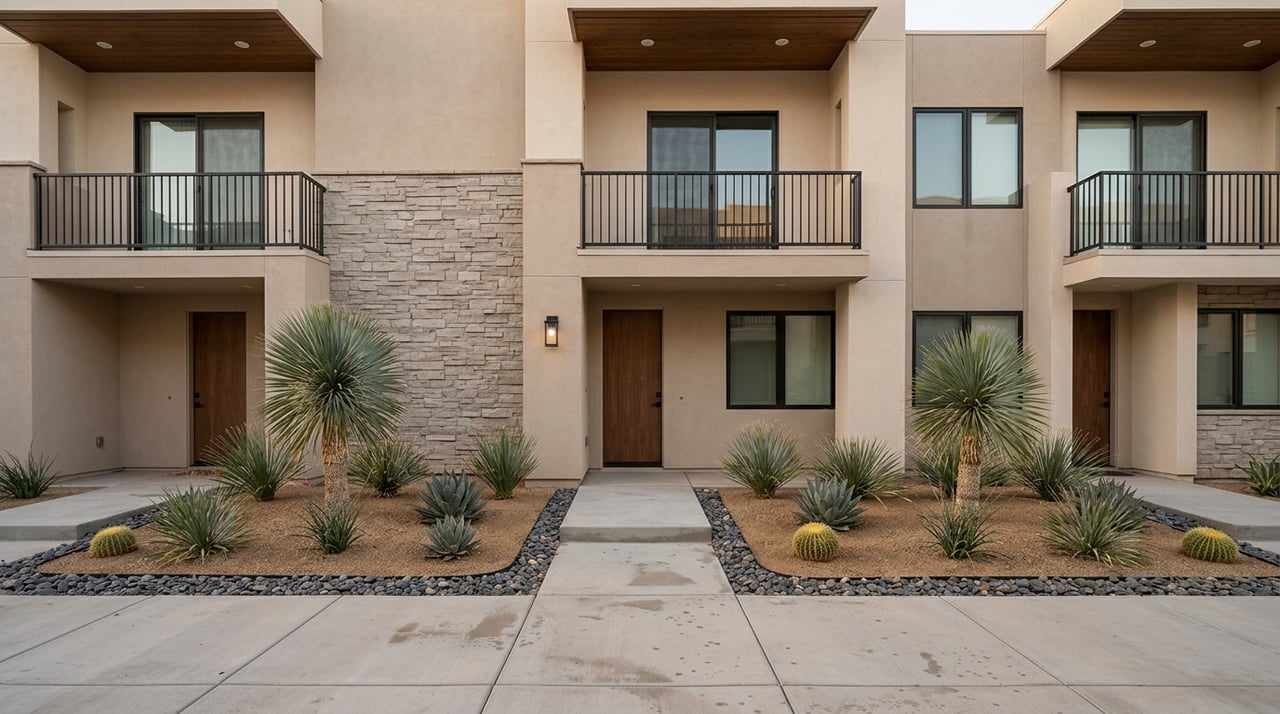
If you are looking for a lower entry point in the Las Vegas market, condos and townhomes may already be on your radar. They can offer a more approachable purchase price than many single-family homes, but the real investment story is not just about price. You also need to understand HOA rules, reserve funding, rental limits, and local tax treatment before you buy. Let’s dive in.
In late June 2026, Redfin showed about 1,901 condos for sale in Las Vegas at a median listing price of $250,000. During the same period, about 880 townhomes were listed at a median price of $367,000. By comparison, Redfin’s broader Las Vegas market page showed a median sale price of about $449,731.
That gap helps explain why attached housing gets attention from investors, second-home buyers, and buyers who want a lower purchase price. It can be a practical way to enter the market with less upfront cost than many detached homes. At the same time, lower purchase price does not automatically mean lower risk or stronger returns.
Rent is another part of the picture, but it needs to be viewed carefully. Zillow reported average Las Vegas rent at $1,905 per month, down $114 year over year, and described the rental market as cool. That means it is smart to run your numbers conservatively rather than assume future rent growth.
When you evaluate a condo or townhome, the listing price is only one part of the math. Monthly HOA dues, reserve funding, transfer fees, tax treatment, and rental rules can all affect your carrying costs. Two properties with similar prices can perform very differently once those details come into focus.
This is especially true in Las Vegas, where many attached-home communities are part of common-interest communities. In those cases, the governing documents can shape how flexible the property will be for your investment plan. A well-priced unit may still be a poor fit if the community rules do not line up with your goals.
For condos and many townhomes, the HOA resale package is one of the most important parts of your review. Nevada Real Estate Division guidance says this package generally includes the declaration or CC&Rs, bylaws, rules and regulations, the information statement, the current operating budget, a current year-to-date financial statement with reserve summary, any unsatisfied judgments or pending legal actions, transfer fees, and a statement of current and expected fees or charges.
That package is generally due within 10 calendar days, is effective for 90 calendar days, and gives the buyer a 5-calendar-day cancellation right after receipt. Those timelines matter because they create a short but important review window. If you are buying for investment, this is where many of the most important answers live.
Start with the basics, then go deeper into the long-term costs and use rules. Key items to review include:
This review can help you understand whether the community is simply collecting dues or actively planning for major common-area costs. It can also reveal restrictions that may limit your rental strategy.
A low HOA payment may look attractive at first glance, but dues alone do not tell the whole story. Nevada law requires annual budget and reserve information for common-interest communities, and reserve-study rules require a long-range look at major components and reserve funding.
For you as a buyer, the reserve summary can be one of the most revealing documents in the package. It may show whether the association is planning for items like roofs, exterior systems, elevators, pools, or other common-area components. If reserve planning is weak, you may face a different risk profile than the monthly dues suggest.
Reserve strength does not guarantee future costs, but it can help you understand how the association is preparing for major expenses. A community with a more thoughtful reserve plan may be better positioned to handle future maintenance needs. That is why the reserve summary deserves as much attention as the asking price.
If your plan is a traditional long-term rental, Nevada law is generally more straightforward than many buyers expect. According to Nevada Real Estate Division guidance, unless the declaration already prohibited renting or leasing when the owner bought the property, the association generally may not prohibit it or require approval just to rent.
There are still important limits to watch for. If the declaration includes a rental cap, that cap generally cannot be lowered in a way that harms current owners, and a hardship waiver may be available in some situations. In practical terms, you should treat rental-cap language in the recorded CC&Rs as a key underwriting item.
Do not assume that every condo or townhome in the same area has the same leasing rules. Rules can vary from one community to the next, even when homes look similar from the outside. The exact HOA documents for the specific property should guide your decision.
Short-term rental use is much more restrictive, and the rules depend heavily on location. In the City of Las Vegas, a short-term rental must be owner-occupied, have no more than three bedrooms, be at least 660 feet from another short-term rental and 2,500 feet from a resort hotel, be in a zone that allows short-term rentals, and have HOA permission if applicable.
The city also requires a business license, a $500 annual fee, and at least $500,000 in liability coverage. For many investors, those requirements can change the feasibility of a short-term rental plan very quickly. This is why short-term rental use should never be assumed based on a property’s appearance or location alone.
In unincorporated Clark County, short-term rentals are licensed as commercial businesses and face a separate set of rules. They are subject to a 1,000-foot separation rule, require the owner of record to apply, limit each person or entity to one licensed short-term rental interest in residential areas, and require express permission in the governing documents for common-interest communities.
Clark County also lists several ineligible unit types, including apartments and certain multifamily situations. For condo and townhome buyers, that means short-term rental strategy often needs a property-by-property and jurisdiction-by-jurisdiction review. In many cases, a long-term rental plan is the simpler path.
Taxes are another piece that can affect your holding costs over time. Clark County says taxable value is assessed annually using the market value of land plus the replacement cost of improvements, less depreciation, with a 35% assessment ratio.
There is also an important distinction between owner-occupied and non-owner-occupied property. Owner-occupied primary residences, including condos and townhomes, can qualify for a 3% tax cap, while non-owner-occupied residences are generally subject to an up to 8% cap. New construction or a change of use does not get a cap in the first fiscal year.
For investors, that means a rental unit can be taxed differently from a primary residence. Before you buy, it is wise to verify the exact parcel status and how the property is currently classified. That extra step can make your budget more accurate from day one.
A good investment fit usually comes down to alignment. You want the HOA budget, reserve funding, rental rules, and tax treatment to match your intended holding period and use.
A simple review checklist can help:
This kind of review may feel detailed, but it can help you avoid surprises after closing. It also gives you a clearer way to compare one property to another.
Las Vegas condos and townhomes can make sense for buyers who want a lower entry price and a potentially more manageable ownership format. Still, the best opportunities are usually found by looking past the listing photos and into the documents that define the actual ownership experience.
If you stay focused on the exact HOA file, the exact rental rules, and the exact tax treatment for the property you are considering, you can make a more confident decision. That steady, detail-first approach is often what separates a promising investment from an expensive lesson.
If you want local guidance as you compare condos and townhomes across the Las Vegas area, Amy Canale can help you evaluate the details with care and clarity.
Stay up to date on the latest real estate trends.






Contact Amy today to learn more about her unique approach to real estate and how she can help you get the results you deserve.

Amy Canale/ Broker-Salesperson, Realtor, BS.0146092, ABR, AHWD, CRS, GRI
8337 West Sunset Road Suite 240 Las Vegas, NV 89113