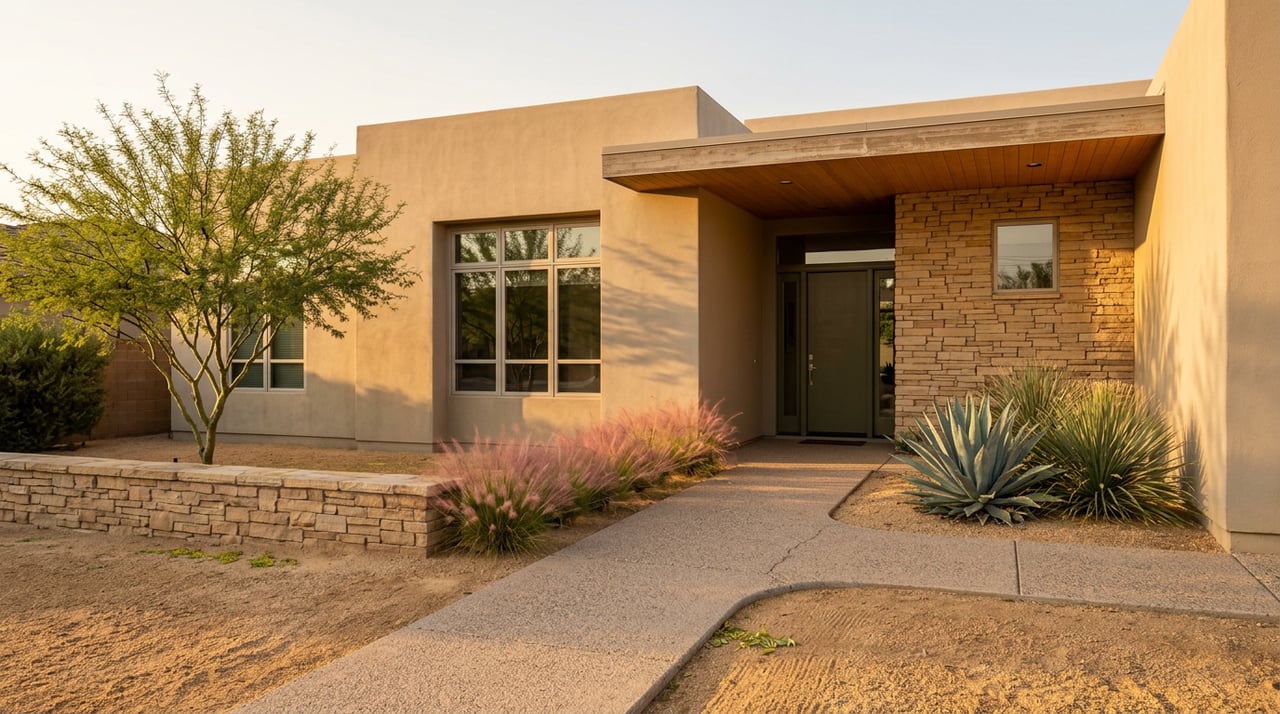
Las Vegas HOA Turf Removal Deadline: What Buyers Need to Ask
September 24, 2026
September 24, 2026
A buyer under contract on a home in one of Las Vegas's master-planned communities called me last week with a question about the resale package sitting in her inbox. The HOA fee on the listing was modest, comfortably inside her budget. But three pages into the association's budget notes, she found a line she didn't recognize: a dollar figure earmarked for turf conversion. She wanted to know if it was a red flag.
It isn't a red flag by itself. But it is the reason the HOA fee printed on a Las Vegas listing this fall tells you less than it used to.
Nevada's Assembly Bill 356 gives homeowners associations, commercial properties, and multifamily communities until December 31, 2026 to remove decorative turf that serves no recreational purpose, and starting January 1, 2027, the Southern Nevada Water Authority will prohibit using Colorado River water to irrigate whatever nonfunctional turf remains on properties that aren't zoned exclusively for single-family use. From where we sit today, that's a little over three months of runway. Some HOA boards in the valley that manage an entry median, a greenbelt strip, or a "decorative carpet" along the street are still figuring out how to pay for that work, and in those associations, the fee a buyer sees on a listing is a snapshot of a budget that is actively being rewritten around a deadline. That's the thing worth understanding before you remove contingencies on anything with an HOA attached to it this fall: the number on the listing is a moment in time, not a forecast.
AB 356 is narrower than it sometimes gets described. It doesn't touch the grass in your own backyard. The Water Authority has been clear that single-family residential lawns, front or back, are excluded from the removal requirement. What the law does target is turf that exists purely to look at: street medians, traffic circles, the strip of grass between a sidewalk and a parking lot, and the landscaped entries and common areas that HOAs maintain but nobody actually walks or plays on. Statewide estimates put roughly 3,900 acres of that kind of nonfunctional turf across the valley, with about 1,000 acres of it sitting at residential properties, mostly front yards that fall outside the mandate.
The part that matters for a buyer is the middle category: turf managed by a homeowners association that doesn't provide a recreational benefit That's the exact landscaping most Las Vegas master-plan HOAs are responsible for, and it's why the deadline shows up in association budgets rather than individual property records.
The City of Las Vegas has already been through part of this. The city replaced more than 107,000 square feet of turf at Police Memorial Park across multiple phases, a conversion the city expects to save more than 6.1 million gallons of water a year. That's a public example of the same work private HOAs are now doing on a smaller scale, on a shorter clock, and usually with less budget flexibility than a city department.
Summerlin gives us the clearest documented example of this pattern, because its 2026 fee increases and the reasons behind them were reported directly by the Las Vegas Review-Journal. Effective January 1, 2026, all three of Summerlin's master associations raised their monthly assessments:
| Master Association | 2025 Monthly Fee | 2026 Monthly Fee |
|---|---|---|
| Summerlin North | $65 | $74 |
| Summerlin South | — | $76 |
| Summerlin West | $60 | $69 |
| Summerlin Council share (included above) | $30 | $37 |
According to Summerlin's own newsletter, the increases reflect additional park and open space maintenance, rising insurance premiums, added personnel and labor costs, utility increases, community center work, reserve funding, and specifically, targeted turf replacement projects. That last item is the one worth pausing on. Summerlin is telling its own residents, in writing, that turf conversion is part of why the number went up.
Summerlin is also a useful example because it shows how small the master fee actually is next to the total picture. That $69 to $76 range only covers the master association and the community-wide Council assessment. Most Summerlin homes also carry a separate village or sub-association fee that funds neighborhood-level landscaping, gated entries, and local amenities, and those fees vary far more widely than the master number. A guard-gated enclave with heavy street-frontage landscaping is going to feel this deadline differently than a village built around desert xeriscaping from the start. The lesson generalizes past Summerlin: whatever community you're looking at, the advertised HOA fee is almost never the whole cost stack, and turf-heavy layouts are the ones most exposed to this particular deadline right now.
A predictable annual dues increase, even one tied to a legal mandate, is the version of this story that's easy to plan around. The version that catches buyers off guard is a special assessment: a one-time bill triggered when an association's reserves aren't funded for a project of this size and the board has to go back to owners for the difference.
There's real money moving through this system that can soften the blow. The Southern Nevada Water Authority's Water Smart Landscapes rebate pays a published rate of $3 per square foot for grass converted to desert landscaping, and the agency recently increased the rebate specifically for commercial, industrial, and multifamily properties to help offset rising labor and material costs. An HOA that applies for that rebate and plans the conversion inside its existing reserves is in a very different financial position than one that waited, has no rebate application on file, and is now facing a compliance deadline with a shortfall. Water costs compound the pressure too: common-area irrigation runs through commercial-scale meters, and the flat service charge on a larger meter can run well over $200 a month before a single gallon is used, independent of the conversion cost itself. That's a fixed cost an association carries either way, which is part of why removing thirsty ornamental grass has a real payback period beyond the mandate.
There's also a legal wrinkle worth knowing about if you're reading an HOA's board minutes this fall. In late January 2026, When In Your State reported that a court order temporarily narrowed how enforcement agencies can classify certain turf as nonfunctional in specific disputes. That means some associations are navigating a bit of uncertainty about exactly which strips of grass count, which can slow down planning at the exact moment the clock is running short.
If you're under contract on a home in a Las Vegas HOA this fall, or comparing a few communities before you write an offer, these are the questions that actually matter right now:
None of this shows up by glancing at the HOA fee printed on a listing. It shows up in the resale package, the reserve study, and a direct conversation with the property manager, which is exactly the kind of homework worth doing before earnest money is fully committed.
The honest takeaway isn't that Las Vegas HOAs are in trouble. Most of what I've described is an association doing exactly what it's supposed to do: budgeting ahead of a known deadline, applying for the rebates available to it, and being transparent with residents about why costs are moving. The takeaway is narrower and more useful than that. This particular fall, in this particular market, the fee on the listing and the true cost of ownership are more likely than usual to be two different numbers, and the gap between them is sitting in a document most buyers never ask to see.
Does this affect single-family homes without an HOA? Not directly. The law excludes single-family residential lawns. But most single-family homes in Las Vegas master-plan communities still belong to an HOA that maintains common-area turf, so the cost still reaches those owners through their dues.
What if my HOA already finished its conversion? Then you're looking at a community that's largely past this risk. Ask for confirmation in writing rather than assuming a low current fee means the work is done.
If you're weighing a purchase in a Las Vegas HOA this fall and want a second set of eyes on the reserve study before you remove contingencies, that's a conversation worth having early. Amy Canale has spent twenty-six years reading Las Vegas resale packages line by line, and would be glad to look at yours with you. Let's Connect.
This article is general information, not legal, tax or financial advice. Consult a qualified professional about your situation.
Stay up to date on the latest real estate trends.


Contact Amy today to learn more about her unique approach to real estate and how she can help you get the results you deserve.
Amy Canale/ Broker-Salesperson, Realtor, BS.0146092, ABR, AHWD, CRS, GRI
8337 West Sunset Road Suite 240 Las Vegas, NV 89113