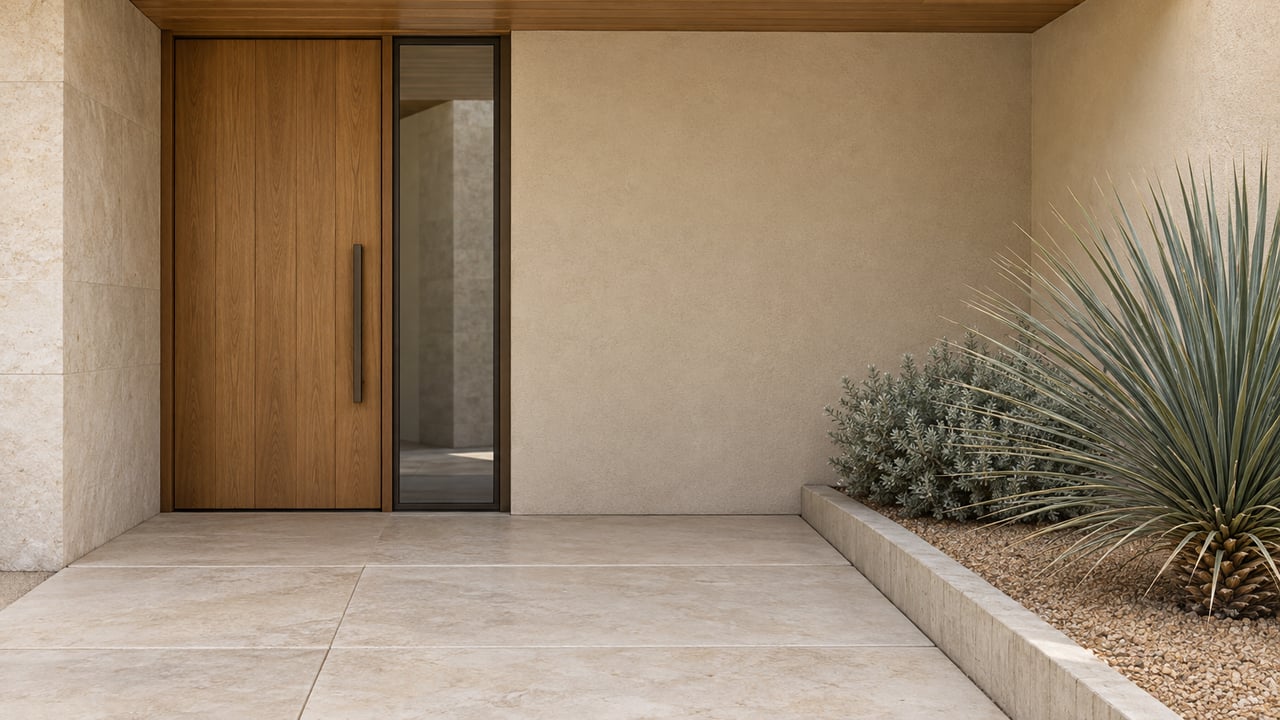
The Property Tax Line on a Las Vegas Listing Isn't Your Bill
October 1, 2026
October 1, 2026
A real estate agent in Las Vegas made local news this week for a discovery that had nothing to do with a listing. Kristine Moran, who has worked as a realtor in Summerlin for the last eight-plus years, told 8 News Now she'd found that several of her clients, and her own best friend, had been paying Nevada's higher property tax rate for years without realizing it. Not because anyone did anything wrong. Because a form that should have been filed after closing never was.
That story matters to anyone buying or selling in Las Vegas this fall for a reason that has nothing to do with Moran's clients specifically. It's a clean illustration of a mechanic built into every Clark County tax bill: the number printed on a listing sheet describes what the current owner pays, and that number does not travel with the house.
Nevada's property tax abatement, codified at NRS 361.4723, limits how much a tax bill can grow year over year. Primary residences are capped at 3 percent annual growth. Everything else, including rentals, second homes and vacant land, is capped at up to 8 percent. The Clark County Assessor's office is explicit about the mechanics: the cap applies to the tax bill itself, not to the home's assessed value, and any recorded ownership document removes the existing owner-occupied abatement from the parcel.
That last part is the one buyers miss. When a deed records, the county does not carry the seller's 3 percent status forward to the new owner. The new owner has to claim it, using a form the Assessor's office typically mails as a postcard after closing. Title companies sometimes file it as part of closing paperwork. Sometimes they don't. If the form isn't filed, the parcel defaults to the 8 percent cap, and the assessor's own guidance notes owners can correct it at any point, but the correction has to come from the homeowner asking.
There's a deadline attached, too, and it matters for claiming the cap.
None of this shows up as a red flag during a showing. A home that's been owned for a decade or more can carry a tax bill that's grown at 3 percent a year while the home's market value climbed far faster, because the cap constrains the bill, not the value underneath it. A buyer who uses that number to estimate their own carrying cost is estimating someone else's arithmetic, not their own.
New construction has its own version of the same trap, and it hits earlier. Clark County's own guidance is direct about this: new construction does not qualify for any cap in its first fiscal year, because the improvement wasn't finished on the date the assessor set that year's roll. The parcel becomes cap-eligible starting the following fiscal year, once the assessor has caught the taxable value up to reflect the finished home. A buyer who budgets off the number on their closing statement, rather than asking what that first reassessment is likely to look like, can be planning around a bill that's about to move before the cap has a chance to apply.
None of this is proposed change. It's how the law already works, and it's been true since the cap was created in 2005. What's new, as Nevada Current reported, is that state lawmakers spent part of August actively debating whether to change the mechanic itself, and one of the options on the table would make the reset far more consequential than it already is.
State Sen. Dina Neal, who chairs the Legislature's interim committee on revenue, had the Legislature's nonpartisan fiscal staff walk the committee through several reform paths this year. One option leaves the current 3 percent and 8 percent caps alone. Another would reset a home's taxable value at the point of sale, rather than letting a new owner start with the parcel's existing capped trajectory.
Analyst Michael Nakamoto illustrated the difference using his own home, a three-bedroom, three-bath split-level in Reno, as a worked example. Under a modest scenario where lawmakers add a new levy outside the existing cap, his bill would run $2,118 in 2029, a 16.5 percent jump in that one year, before settling back into normal 3 percent growth. If the abatement were eliminated entirely alongside a rate increase, the same house would jump to $3,829, a 110.5 percent change. If lawmakers instead reset taxable value at the point of sale, and Nakamoto sold that same home in 2029, the buyer would start at $7,782, which is 327 percent more than what Nakamoto paid the year before.
An estimated $18.6 billion in property tax has been abated statewide since 2007, according to the legislative staff analysis presented to Neal's committee. That's the scale of what the current cap has been holding back, and it's the reason a reset-at-sale reform keeps resurfacing even though it hasn't passed.
"We should not spend another hot dime, or six pennies, on another property tax study. Because we know what the answer is. We just don't politically want to do any of these solutions."
That's Neal, quoted by Nevada Current, describing why she skipped straight to laying out already-studied options rather than commissioning another report. A constitutional amendment along these lines, sponsored last year by Assemblymember Natha Anderson, already passed the Assembly once but never got a Senate vote. Groups including the Nevada Revenue Coalition are pushing to revive it. The Las Vegas Review-Journal reported that, as a constitutional amendment, it would need to clear the Legislature in two consecutive sessions and then go before Nevada voters statewide before it could take effect, a process the earlier version pointed toward a 2028 ballot. Nothing changes for a Las Vegas closing this fall. But the direction of the conversation is worth knowing if you're buying a home you plan to hold for years, because the gap between a long-held tax bill and a fresh one is already the single most common surprise at closing, and lawmakers are actively discussing whether to widen it.
| Scenario (Nakamoto's Reno home, hypothetical 2029 bill) | Change from prior year |
|---|---|
| Current 3% cap, new levy added outside the cap | $2,118, up 16.5% |
| Abatement eliminated, rate increased | $3,829, up 110.5% |
| Taxable value reset at point of sale | $7,782, up 327% |
A few things are worth confirming before you write an offer or accept one, rather than assuming the tax line on the listing carries forward.
For buyers, pull the parcel record directly from the Clark County Assessor's site rather than budgeting off the seller's current bill. Ask specifically whether the primary residence claim form has been filed once you close, and don't wait for a postcard to arrive before checking. If you're buying new construction, ask your builder or agent what the post-completion reassessment is expected to look like, not just what the closing statement shows.
For sellers, know that your own capped bill isn't a selling point you can hand off. It's useful context for a buyer's due diligence, but it isn't a number they'll inherit.
Does the seller's 3 percent cap transfer to me when I buy their home? No. The cap is tied to the ownership record, not the parcel. A recorded sale removes the existing owner-occupied abatement, and the new owner has to file their own claim to get the 3 percent primary-residence rate.
What happens if the postcard from the Assessor's office never shows up? The Assessor's office has said homeowners can correct their status at any time, but the correction has to be requested. If a few months pass after closing and nothing has arrived, contacting the Assessor's office directly is the more reliable path than waiting on the mail.
Could the reset-at-sale proposal pass before I sell my current home? Not this year. It's a constitutional amendment, which under Nevada's process needs to pass the Legislature in two consecutive sessions before going to a statewide vote. The version discussed this year would need to clear a future session first.
Property tax mechanics rarely make headlines, but this fall they're doing it twice over, once in a local newsroom and once in a legislative hearing room. Either one is reason enough to check your own parcel's status before it becomes a surprise on someone's closing statement. If you'd like help pulling the actual numbers on a specific Las Vegas property before you write an offer or list your home, Amy Canale is glad to walk through it with you.
This article is general information, not legal, tax or financial advice. Consult a qualified professional about your situation.
Stay up to date on the latest real estate trends.



Contact Amy today to learn more about her unique approach to real estate and how she can help you get the results you deserve.

Amy Canale/ Broker-Salesperson, Realtor, BS.0146092, ABR, AHWD, CRS, GRI
8337 West Sunset Road Suite 240 Las Vegas, NV 89113